The Gross National Debt:
One-Two!
PLEASE STOP SHOVELLING!!!
Click HERE if you can handle more detail


How much longer?

Click on the mic to see...
Showing posts with label US Government. Show all posts

Monday, September 10, 2012

Does it make sense?

Nearly two years after the introduction of the path-breaking plug-in hybrid, GM is still losing as much as $49,000 on each Volt it builds, according to estimates provided to Reuters by industry analysts and manufacturing experts. GM on Monday issued a statement disputing the estimates.
Cheap Volt lease offers meant to drive more customers to Chevy showrooms this summer may have pushed that loss even higher. There are some Americans paying just $5,050 to drive around for two years in a vehicle that cost as much as $89,000 to produce.
And while the loss per vehicle will shrink as more are built and sold, GM is still years away from making money on the Volt, which will soon face new competitors from Ford, Honda and others.
GM's basic problem is that "the Volt is over-engineered and over-priced," said Dennis Virag, president of the Michigan-based Automotive Consulting Group.
Read more >> Reuters...

Each Chevy Volt sold thus far may have as much as $250,000 in state and federal dollars in incentives behind it – a total of $3 billion altogether, according to an analysis by James Hohman, assistant director of fiscal policy at the Mackinac Center for Public Policy.
Read more >> CAPCON...

Consumer Reports offered a harsh initial review of the Chevrolet Volt, questioning whether General Motors Co.'s flagship vehicle makes economic "sense."The extended-range plug-in electric vehicle is on the cover of the April issue — the influential magazine's annual survey of vehicles — but the GM vehicle comes in for criticism.
"When you are looking at purely dollars and cents, it doesn't really make a lot of sense. The Volt isn't particularly efficient as an electric vehicle and it's not particularly good as a gas vehicle either in terms of fuel economy," said David Champion, the senior director of Consumer Reports auto testing center at a meeting with reporters here. "This is going to be a tough sell to the average consumer."
Peruse Chevrolet's February sales release, and you'll notice one number that's blatantly missing: the number of Chevy Volts sold. The number – a very modest 281 – is available in the company's detailed data (PDF), but it certainly isn't something that GM wants to highlight, apparently. Keeping the number quiet is a bit understandable, since it's lower than the 321 that Chevy sold in January.
Read more >> autobloggreen...

Read more >> Volt...

Sunday, July 03, 2011

When the Obama administration releases a report on the Friday before a long weekend, it’s clearly not trying to draw attention to the report’s contents. Sure enough, the “Seventh Quarterly Report” on the economic impact of the “stimulus,” released on Friday, July 1, provides further evidence that President Obama’s economic “stimulus” did very little, if anything, to stimulate the economy, and a whole lot to stimulate the debt.
The report was written by the White House’s Council of Economic Advisors, a group of three economists who were all handpicked by Obama, and it chronicles the alleged success of the “stimulus” in adding or saving jobs. The council reports that, using “mainstream estimates of economic multipliers for the effects of fiscal stimulus” (which it describes as a “natural way to estimate the effects of” the legislation), the “stimulus” has added or saved just under 2.4 million jobs — whether private or public — at a cost (to date) of $666 billion. That’s a cost to taxpayers of $278,000 per job.
In other words, the government could simply have cut a $100,000 check to everyone whose employment was allegedly made possible by the “stimulus,” and taxpayers would have come out $427 billion ahead.

Friday, May 20, 2011

What happened?!?


Analysts who once downplayed the government’s role in causing the financial crisis now have changed their tune, concluding that government regulations that promoted risky loans played a major role in spawning the crisis. In a May 3 note to clients, Michael Cembalest, the Chief Investment Officer of JP Morgan Private Bank, revised his 2009 account of what caused the financial crisis. Under the heading, “Retractions – the primary catalyst for the US housing crisis,” he wrote:
US Agencies played a larger role in the housing crisis than we first reported. 
In January 2009, I wrote that the housing crisis was mostly a consequence of the private sector… However, over the last 2 years, analysts have dissected the housing crisis in greater detail. What emerges from new research is something quite different: government agencies now look to have guaranteed, originated or underwritten 60% of all “non-traditional” mortgages, which totaled $4.6 trillion in June 2008. What’s more, this research asserts that housing policies instituted in the early 1990s were explicitly designed to require US Agencies to make much riskier loans, with the ultimate goal of pushing private sector banks to adopt the same standards.” (emphasis in original)

Read more >> 
OpenMarket.org...

Tuesday, April 12, 2011

Comic book budget squabble...


The world had better start paying attention to the US government’s inability to govern. The prevailing mood over this has been strangely complacent. Six months of the fiscal year gone and only now a ramshackle budget? Government brought to the brink of shutdown over trifling disagreements? Absurd, one thinks, but this is Washington. Do as most Americans do, and regard the pantomime with blithe contempt. In the end, out of sheer exhaustion, the actors do their deals and it is business as usual.

Read more >> 
Financial Times...

Thursday, March 24, 2011

Near the bottom...


The US ranks near the bottom of developed global economies in terms of financial stability and will stay there unless it addresses its burgeoning debt problems, a new study has found.
In the Sovereign Fiscal Responsibility Index, the Comeback America Initiative ranked 34 countries according to their ability to meet their financial challenges, and the US finished 28th, said David Walker, head of the organization and former US comptroller general.
"We think it is important for the American people to understand where the United States is as compared to other countries with regard to fiscal responsibility and sustainability," Walker said in a CNBC interview. "Americans are used to rankings and they're used to ranking very high, but frankly in this area we rank very low."

Read more >> 
CNBC.com...

Wednesday, March 16, 2011

Everything costs more...

Wholesale prices jumped last month by the most in nearly two years due to higher energy costs and the steepest rise in food prices in 36 years. Excluding those volatile categories, inflation was tame.
The Labor Department said Wednesday that the Producer Price Index rose a seasonally adjusted 1.6 percent in February - double the 0.8 percent rise in the previous month. Outside of food and energy costs, the core index ticked up 0.2 percent, less than January's 0.5 percent rise.
Food prices soared 3.9 percent last month, the biggest gain since November 1974. Most of that increase was due to a sharp rise in vegetable costs, which increased nearly 50 percent. That was the most in almost a year. Meat and dairy products also rose.
Energy prices rose 3.3 percent last month, led by a 3.7 percent increase in gasoline costs.

Read more >> The Island Packet...

Thursday, March 03, 2011

Former Federal Reserve Chairman Alan Greenspan said a surge in U.S. government “activism,” including fiscal stimulus, housing subsidies and new regulations, is holding back the economic recovery.
Read more >> Bloomberg...

Monday, February 28, 2011

Duplication...


The U.S. government has 15 different agencies overseeing food-safety laws, more than 20 separate programs to help the homeless and 80 programs for economic development.
These are a few of the findings in a massive study of overlapping and duplicative programs that cost taxpayers billions of dollars each year, according to the Government Accountability Office.
A report from the nonpartisan GAO, to be released Tuesday, compiles a list of redundant and potentially ineffective federal programs, and it could serve as a template for lawmakers in both parties as they move to cut federal spending and consolidate programs to reduce the deficit. Sen. Tom Coburn (R., Okla.), who pushed for the report, estimated it identifies between $100 billion and $200 billion in duplicative spending. The GAO didn't put a specific figure on the spending overlap.

WASHINGTON (AFP) – China's holdings of US bonds reached $1.16 trillion at the end of December, almost $270 billion more than previously estimated, new data showed Monday.
Beijing, which has converted much of a huge trade surplus with the United States over the past two decades into buying up US treasuries and other securities, held 26.1 percent of the total of $4.44 trillion held by foreigners, the Treasury said.
The figures came as the US government recalculated its data on foreign holdings of US securities from June 2010.
Chinese-held Treasuries have fallen since hitting a high of $1.18 trillion in October, under the revised figures. Japan remained by far the second largest holder of US government debt, with $882 billion in December, around $1.3 billion less than original estimates.
Britain was third at $272.1 billion.

Monday, February 14, 2011

Who's picking up the tab?


Less than two years after entering bankruptcy, General Motors will extend millions of dollars in bonuses to most of its 48,000 hourly workers as a reward for the company's rapid turnaround after it was rescued by the government.
Read more >> AP...

Slow train wreck coming...


Barack Obama may lose the advantage of low borrowing costs as the U.S. Treasury Department says what it pays to service the national debt is poised to triple amid record budget deficits.
Interest expense will rise to 3.1 percent of gross domestic product by 2016, from 1.3 percent in 2010 with the government forecast to run cumulative deficits of more than $4 trillion through the end of 2015...
Read more >> Bloomberg...

Thursday, February 10, 2011

P.O. Blues...


The U.S. Postal Service warned Wednesday that it may default on some of its financial obligations later this year after reporting yet another quarterly loss.
The USPS, a self-supporting government agency that receives no tax dollars, said it suffered a loss of $329 million in the first quarter of federal fiscal year 2011. That compared with a loss of $297 million a year earlier.

Read more >>  CNNMoney...

Wednesday, December 15, 2010

IRS in action...

The Internal Revenue Service is making it a bit riskier to cheat on your taxes.
The tax agency increased the number of returns it audited by nearly 11 percent this year, statistics released Wednesday show. Wealthy taxpayers and big businesses were most likely to be targeted.
The IRS also stepped up audits of charities and other tax-exempt organizations.
Read more: npr.com...

Thursday, October 21, 2010

Taken for a ride?


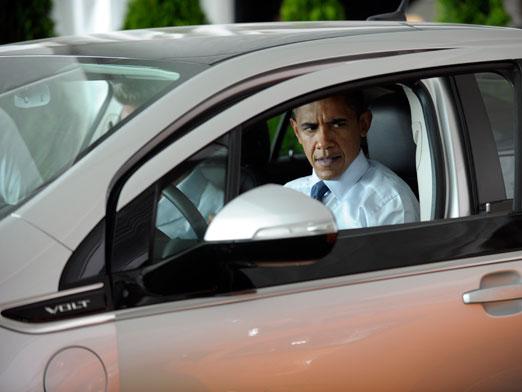
Government Motors' all-electric car isn't all-electric and doesn't get near the touted hundreds of miles per gallon. Like "shovel-ready" jobs, maybe there's no such thing as "plug-ready" cars either.
The Chevy Volt, hailed by the Obama administration as the electric savior of the auto industry and the planet, makes its debut in showrooms next month, but it's already being rolled out for test drives by journalists. It appears we're all being taken for a ride.

Read more >> Volt...

Thursday, October 07, 2010

Food Stamp Nation by Pat Buchanan

"The lessons of history ... show conclusively that continued dependence upon relief induces a spiritual and moral disintegration fundamentally destructive to the national fiber. To dole out relief in this way is to administer a narcotic, a subtle destroyer of the human spirit."

These searing words about Depression-era welfare are from Franklin Roosevelt's 1935 State of the Union Address. FDR feared this self-reliant people might come to depend permanently upon government for the necessities of their daily lives. Like narcotics, such a dependency would destroy the fiber and spirit of the nation.
What brings his words to mind is news that 41.8 million Americans are on food stamps, and the White House estimates 43 million will soon be getting food stamps every month.
A seventh of the nation cannot even feed itself.
If you would chart America's decline, this program is a good place to begin. As a harbinger of the Great Society to come, in early 1964, a Food Stamp Act was signed into law by LBJ appropriating $75 million for 350,000 individuals in 40 counties and three U.S. cities.

Read more: WorldNetDaily...

Exempt!

Nearly a million workers won't get a consumer protection in the U.S. health reform law meant to cap insurance costs because the government exempted their employers.
Thirty companies and organizations, including McDonald's (MCD) and Jack in the Box (JACK), won't be required to raise the minimum annual benefit included in low-cost health plans, which are often used to cover part-time or low-wage employees.
The Department of Health and Human Services, which provided a list of exemptions, said it granted waivers in late September so workers with such plans wouldn't lose coverage from employers who might choose instead to drop health insurance altogether.
Without waivers, companies would have had to provide a minimum of $750,000 in coverage next year, increasing to $1.25 million in 2012, $2 million in 2013 and unlimited in 2014.

Read more: USA TODAY...

Friday, August 13, 2010

Whistleblowers...

New US whistleblowing incentives within the Dodd-Frank financial reform act – that could net informants multimillion dollar pay-outs – are likely to generate a surge in allegations against US-listed companies and Wall Street banks, lawyers say.
The Securities and Exchange Commission is expecting a sharp increase in tip-offs from senior employees and third parties prompted by potential seven-figure bounties.
“The scale of the awards reflects the high quality of whistleblower we hope to get – people within a company, broker or other regulated firm that we might not have heard from before,” Stephen Cohen, an SEC official, told the Financial Times. “We’re expecting a tremendous response.”

Wednesday, August 11, 2010

Federal workers rule!

At a time when workers' pay and benefits have stagnated, federal employees' average compensation has grown to more than double what private sector workers earn, a USA TODAY analysis finds.
Federal workers have been awarded bigger average pay and benefit increases than private employees for nine years in a row. The compensation gap between federal and private workers has doubled in the past decade.
Federal civil servants earned average pay and benefits of $123,049 in 2009 while private workers made $61,051 in total compensation, according to the Bureau of Economic Analysis. The data are the latest available.
The federal compensation advantage has grown from $30,415 in 2000 to $61,998 last year.
Public employee unions say the compensation gap reflects the increasingly high level of skill and education required for most federal jobs and the government contracting out lower-paid jobs to the private sector in recent years.
Read more: USA TODAY...

Tuesday, August 10, 2010

Is Obama anti-business?

WASHINGTON (AP) - Labeled anti-business by Republicans and some corporate chiefs, President Barack Obama mounted a campaign to show he wasn't. But his charm offensive has hit a rocky patch.
Business leaders gripe about burdensome new financial and health care regulations, what they see as unfriendly tax policies and vast government spending. They were put off by Obama's harsh depiction of "fat cat bankers" and "reckless practices," a label he applied both to Wall Street and to oil-spill giant BP.